
No products in the basket.
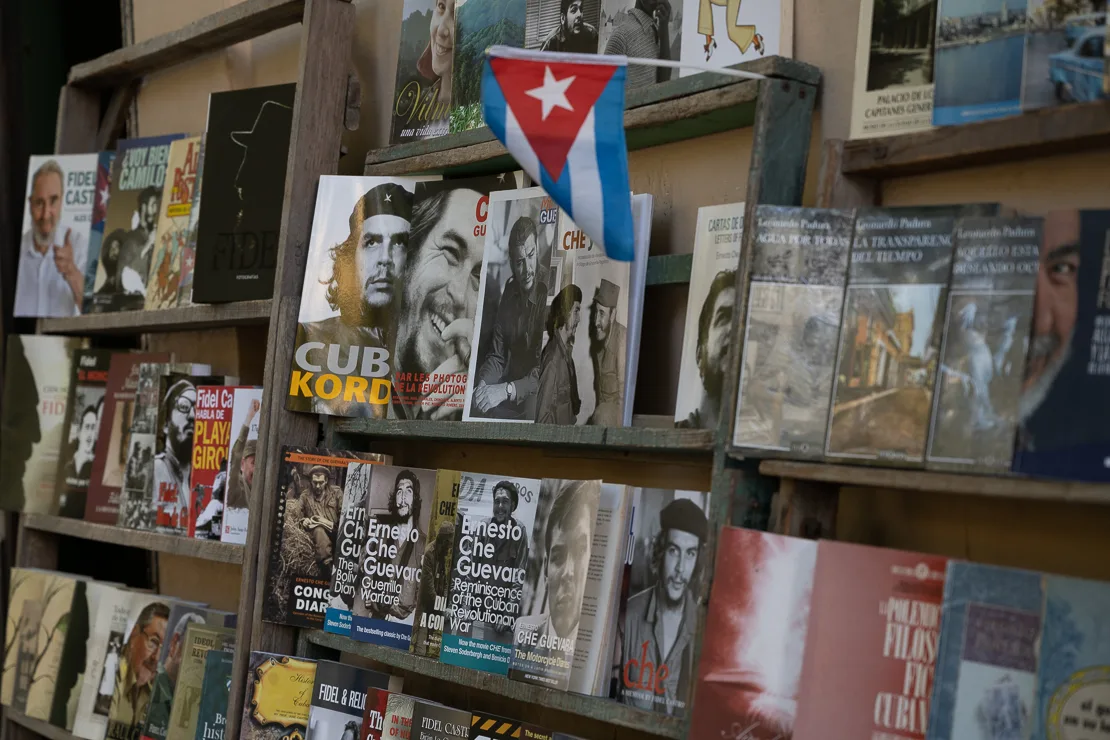
Experiencing Cuba: A Traveller’s Perspective
January 24, 2023
I have been travelling around Latin America pretty extensively over the past 25 years. I had always wanted to visit Cuba and had heard that since Fidel Castro passed away, the island would probably change rapidly. After the end of the COVID-19 pandemic, I finally saw an opportunity to travel to Cuba and experience it for myself. My wife and I spent almost six weeks in Cuba in December 2022 and January 2023.
The information below is based on conversations with locals, research before our trip, and our experience along the road. Instead of staying at all-inclusive resorts enjoying Caribbean weather while relaxing on beaches like many tourists, we decided to travel extensively throughout the island. We became very aware of local struggles. It is unlikely guidebooks will tell you anything about the current situation in Cuba, so we thought it would be useful to provide as much information as possible.
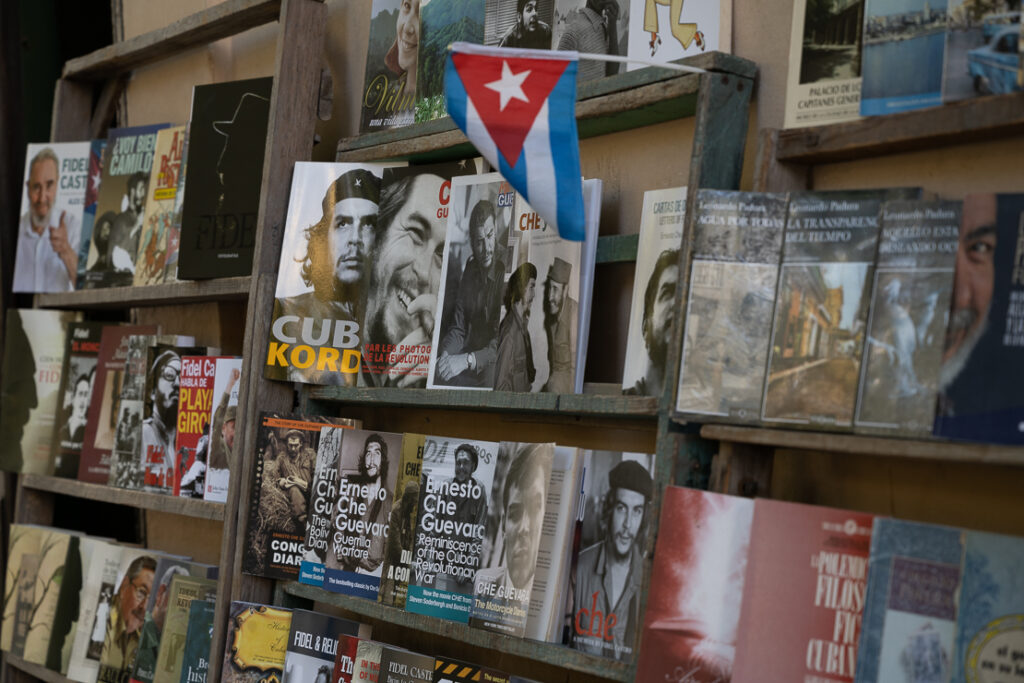
Let’s begin with a look at Cuba’s history. Cuba has experienced uprisings, civil wars, military takeovers and several revolutions throughout history. The U.S. embargo, introduced in 1958 after Fidel’s government nationalised all foreign assets in Cuba without compensation, is still in place. It prevents U.S. businesses from conducting trade with Cuba. The embargo includes all imports and exports except food and medicines. As a result, Cuba has mostly traded with Russian, Venezuelan, Vietnamese and Chinese businesses to build, run and maintain Cuba’s infrastructure as well as import sufficient supplies to feed the Cuban population.
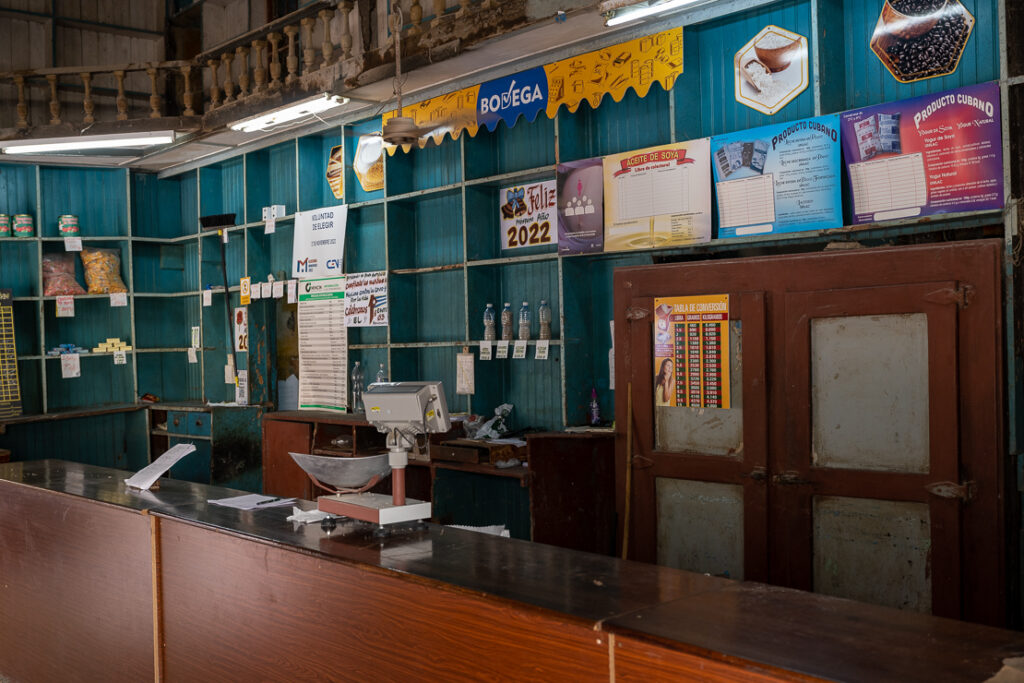
In 1962, the Cuban government introduced food rationing. This rationing is still in place and the amount of food supplied has decreased over the years due to the end of billions in yearly financial support from the USSR.
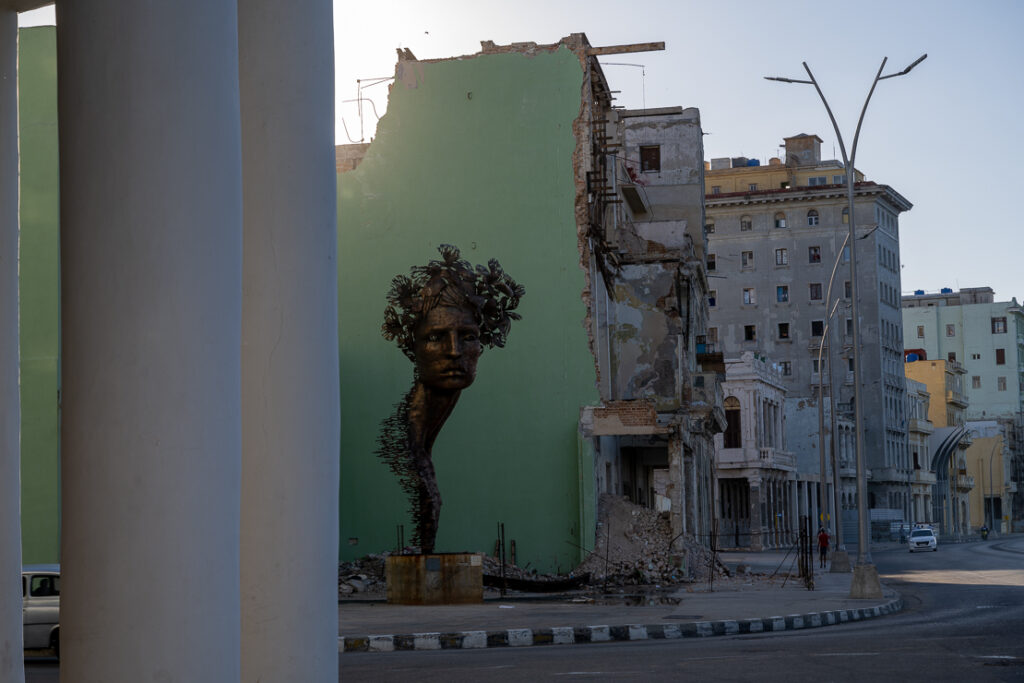
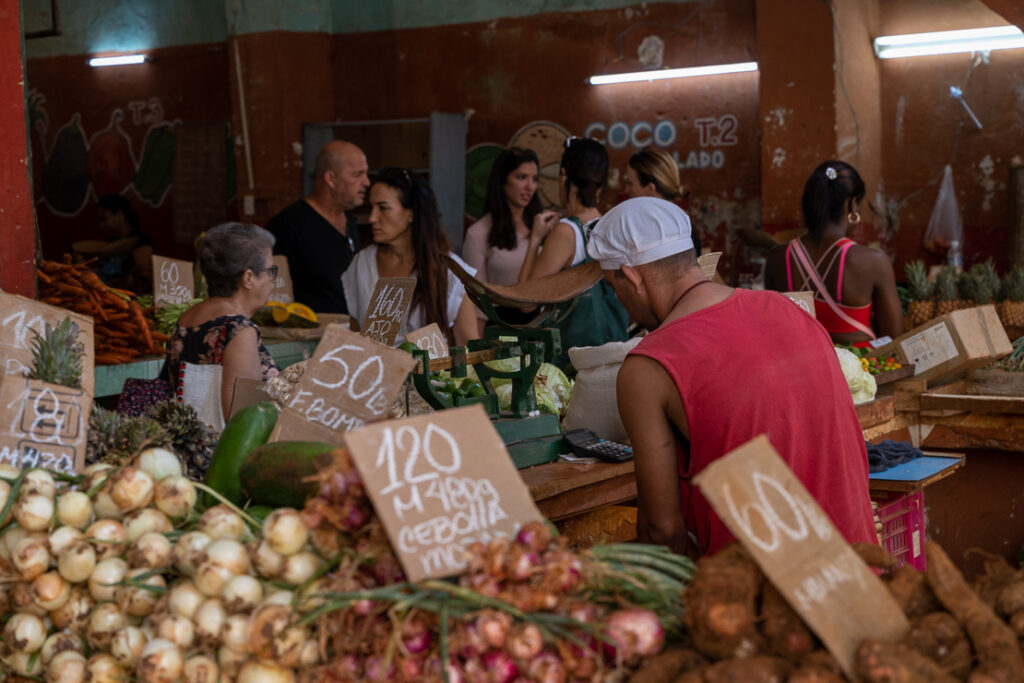
This lack of funding has led to a flourishing black market, which the Cuban people use to get access to food and other necessary products on a daily basis. In addition, the infrastructure is really outdated, the roads, the trains and buses are not being maintained, electricity and fuel being scarce and homes being in a dire need of refurbishment.
Sadly, the island has not yet recovered from the COVID-19 pandemic. This has had a major impact on supplies across the island, be it water, fruits, bread, milk, butter or coffee. Furthermore, the west of the island (Pinar del Río province) was hit by hurricane Ian in September 2022 leaving the entire island without power.
Despite all their struggles, we met wonderful, welcoming and very helpful locals. One thing is sure… they really need tourism to survive.
We quickly discovered that it can be difficult to get updated information when on-site. Mobile and internet connections in Cuba are patchy, and a lot of the information available online is outdated. A word of advice, order a Cubacel SIM card before you travel to Cuba or visit an ETECSA shop to purchase one (if available) when you arrive. It will help you navigate through Cuba more easily.
I would also suggest that it is crucial to learn some Spanish, especially if you intend to travel without a pre-arranged group itinerary. Although many Cubans speak English, it will be much easier to get around and handle any issue that may arise during your stay. I highly recommend the Duolingo app, which I have used to learn various European languages.
Now that I have exposed the political and economical situation, a little more information about Cuba’s currency. In the middle of the COVID-19 pandemic in January 2021, the Cuban government took the tourist currency (CUC) out of circulation and introduced new Cuban Pesos. These changes made the Cuban people five times poorer overnight, as the exchange rate went from 25 CUC to the Dollar to 125 Cuban Pesos to the Dollar, which was the black market rate at the time. It did simplify transactions for tourists, but the main reason the government introduced this change was to have a higher influx of foreign currency in the country. The government needed more currency to be able to trade with foreign countries, as they are not given any line of credit and need to pay for everything in cash.
During our stay, we realised that the government do not encourage people to be entrepreneurs as they are being taxed heavily. Initially, Cubans were not even allowed to own private businesses, but this rule has been amended over the years. However, the state have set a limit to the amount of income Cuban private business owners are allowed to generate. Any income above this defined threshold goes directly into the government’s coffers.
We also discovered that although hotel occupancy was already very low, the government has continued to build luxury hotels. Those hotels were built together with foreign companies, which neglected to involve Cuban architects and builders. Those hotels have not been designed with local knowledge and have ended up being very power hungry, putting the electricity grid under further pressure.
Based on my research, around 95 percent of electricity generated in Cuba comes from non-renewable resources (oil and natural gas). Electricity companies have to enforce rolling blackouts to ensure that there is enough electricity for everyone. Unfortunately, the blackouts are not equally spread, and some regions have much longer blackouts than others. During our stay, we only experienced one blackout of around three hours in Viñales, but I understand that regions in the east of the country (e.g. Santiago de Cuba, Baracoa) have much longer and frequent blackouts than those in the west. Walking around cities at night can be tricky as the pavements are crumbling and there is almost no light. On top of energy related issues, the east also seem to be struggling more with food supplies. We were unable to order coffee in several coffee shops or get bottled water during our stay in Camagüey and later in Santiago de Cuba.
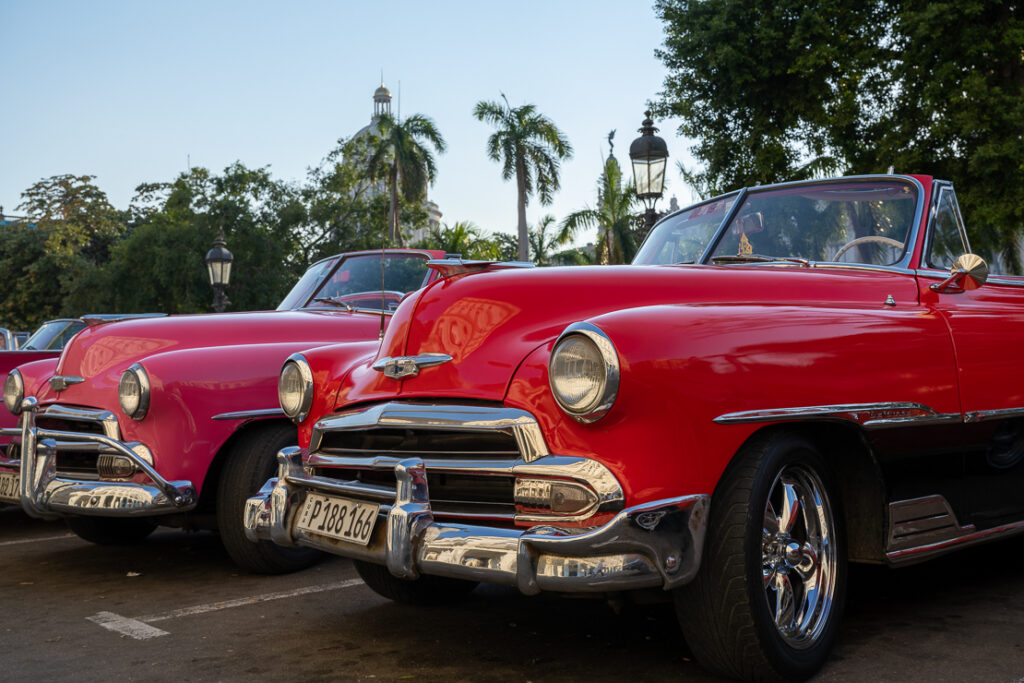
If you plan to travel for two to three weeks, we would recommend that you stay in the west of the country visiting for example La Havana, Viñales, Cienfuegos, Trinidad, Santa Clara and the Matanzas region. You will experience the real Cuba and still find it easy to encounter shared taxis (colectivos) to travel from one point to another. Venturing further east becomes more difficult as there are not enough tourists travelling to Camagüey, Santiago de Cuba, Guantana or Baracoa. You will have to rely on buses and the journey will be much longer and arduous. You could also decide to arrange a private taxi, but this will make quite a dent in your budget.
As mentioned at the beginning of this post, I have travelled extensively across Latin America in the past. I was very surprised at how difficult it can be to get reliable information related to transportation in Cuba. The roads are in a terrible state and there is a shortage of fuel. We met a couple who had hired a car, and they were worried about getting stuck somewhere without petrol. They had revised their itinerary to stay nearer to La Havana instead of venturing further out. After a few days in Santiago de Cuba, we also decided to cut short our journey in the east and skipped visiting Baracoa and Holguín due to fear of getting stuck far away from La Havana without transportation to get back to the airport in time for our return flight. We managed to catch a night bus from Santiago de Cuba to Santa Clara in the end.
When travelling around Cuba, if you choose to travel by bus, you should be able to book your ticket online on the Viazul website, but your payment may not always go through. A booking does not guarantee a seat on the bus unless it has been paid for in full. If you were unable to pay for your ticket online, you will have to go to the local bus ticket office with your booking reference to pay for and to retrieve your ticket.
If your choice of transportation is the train, be aware that you may not be able to get a train ticket for several weeks. We were told that some trains run every second or every fourth day in some places, but there is apparently a waiting list to purchase tickets. A Spanish couple went to the train station in La Havana to purchase tickets. They were told to return the next day and then discovered that the queue was not to purchase the tickets, but to simply register their name to purchase a ticket the following month.
If you plan to catch inland flights, check their availability beforehand. We found out towards the end of December 2022 that there were no flights at all with Cubana from Santiago de Cuba to La Havana until 10 January 2023.
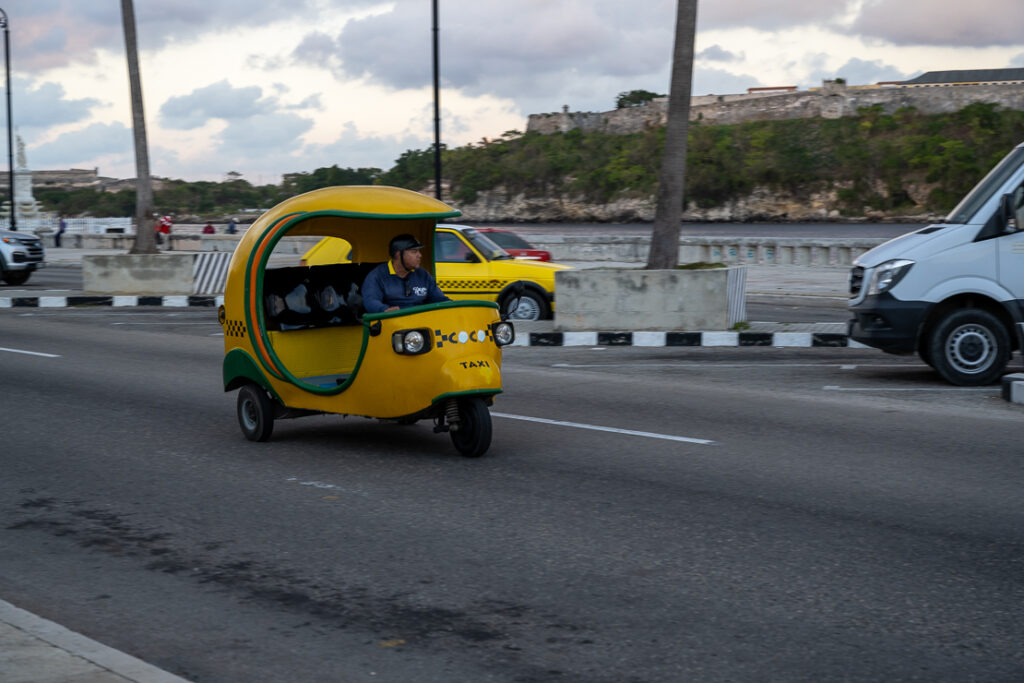
After almost six weeks in Cuba, we are now back in the UK. We had a great time, we met plenty of lovely people, but there were a few tough moments. Our experience has made us genuinely grateful for what we have at home.
If you are thinking of travelling to Cuba, go for it. It is a fascinating country with so much to offer tourists outside the resorts with their beautiful sandy beaches and clear blue sea. However, do your research and be prepared for the fact that not everything will run smoothly. There are still significant shortages of many basic supplies on the island, and the infrastructure is often not up to scratch. But if you are willing to tolerate the odd cold shower and hard bed, and accept an occasional set back, you will have an incredible time in Cuba. It really is like stepping back in time. The island has a lot to offer with its colourful colonial buildings, the music and most of all the delightful people.
Over the next few weeks, I will publish individual posts telling of our experiences from the cities we visited. Watch this space!